Cookie preferences

Choose what Trio may use in this browser. You can change your choice anytime under “Cookie preferences” in the footer.

  1. #6

    New integrations 💚 💜

    We now support Sicredi Business and Nubank Personal, bringing more and better connections to improve your customers' experience.

    🆕 Nubank and Sicredi are here!
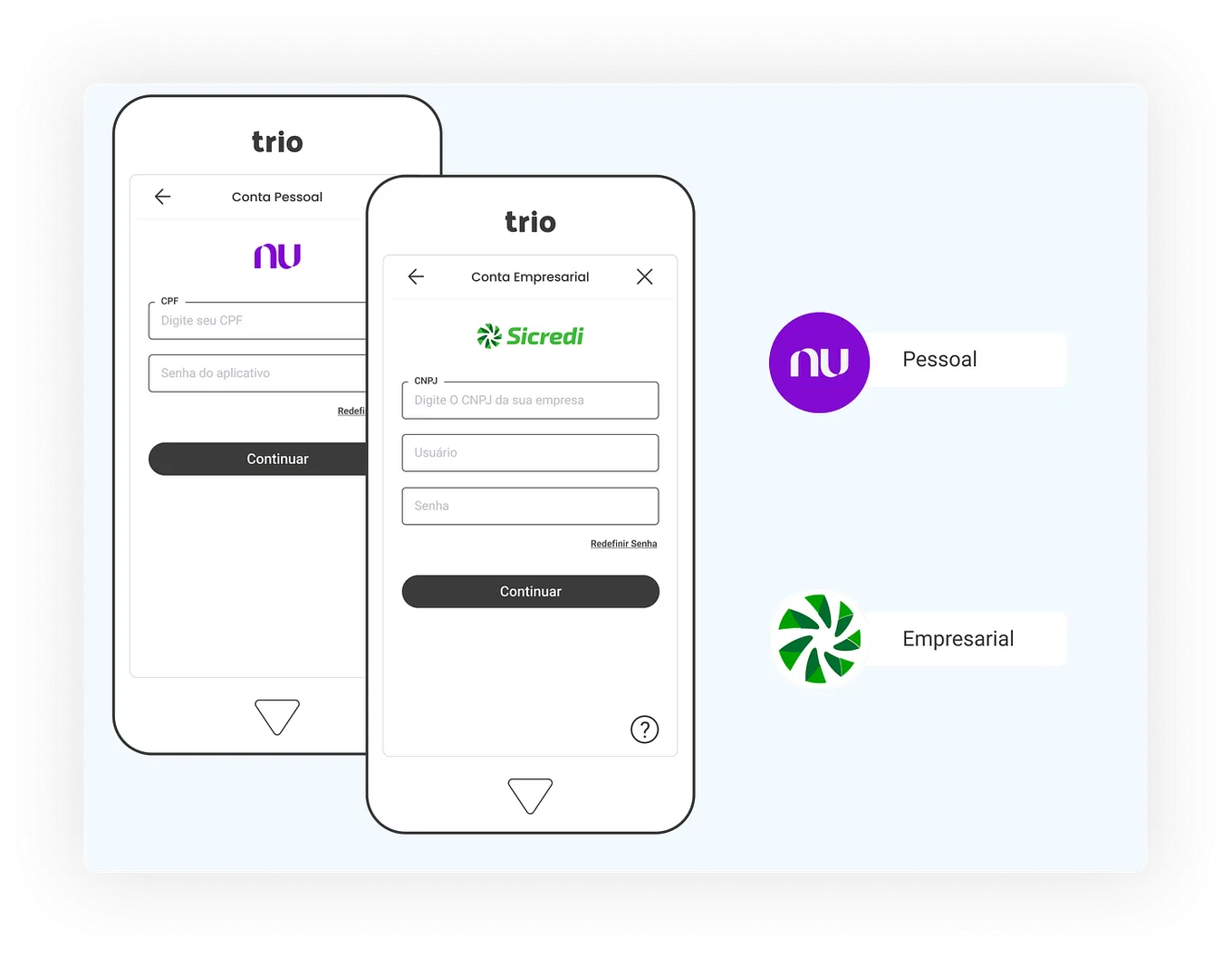
    🟢 Sicredi Business / V2 integration:
    • Bank account data
    • Registration data
    • Real-time balance
    • Checking account statement
    • Credit card
    💜 Nubank Personal / V2 integration:
    • Bank account data
    • Registration data
    • Real-time balance
    • Account statement
    • Credit card
    🟡 API versioning
    • Existing banks will keep running on V1 for now, but Sicredi Business and Nubank Personal will be on V2, as will all Investments and Bradesco credit cards
    What changes in V2:
    • The credit_card endpoints will be merged into balance and transactions, so the balance and transactions endpoints each return the identifier of the account in question, whether a credit card number or a checking account number, as identification_number, which has two possible formats: (XXXX.XXXX.XXXX.XXXX/0012443-2).
    • The /balances response will be an object with the key balances, whose value is the list of all balances.
    • The /transactions response will be an object with the key transactions, whose value is the list of all transactions
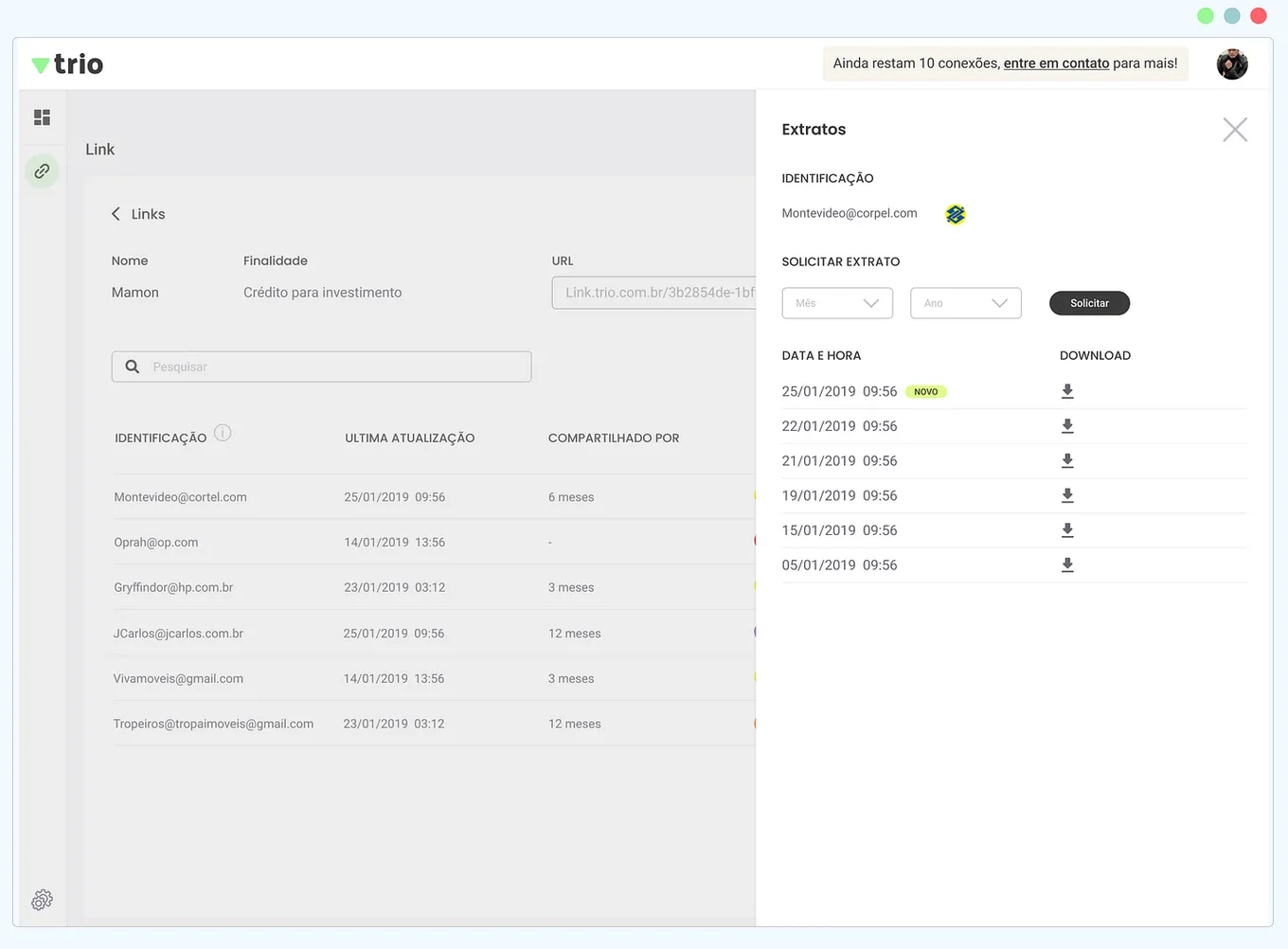
    • Identification, labels and masks
    ⚠️ [Attention]: In the webhook response, fetch and balance operations return the Connection ID, which requires version 2 of the API; in V1 it stays as described in the documentation

    🧠 Improvements

    • New webhook event for history updates

      • Updates to transaction descriptions and transaction splits (!)
      • Identification of transactions when they are updated, deleted or inserted, in the update_history webhook
      • Credential updates on the connection
    • Optional opening balance creation for better credit card statement fetching

    • Extended transaction fetching:

      • Santander Business: fetching transactions for older months
      • Bradesco Business: fetching the most recent transactions (daily transaction fetching)
    • SDK improvements [Bridge]:

      • Identification by CPF and CNPJ (individual and company tax IDs) for added security
      • Option to configure Bridge to pass in an already identified user, skipping the user identification step in the SDK
      • Option to show only business account institutions or only personal account institutions.
      • Option to set a filter that shows only selected institutions or opens directly on a specific one.
    • Partial balance filter applied to Itaú transactions

    • Filter for fetching transactions by date and by account

    • Usability improvements to Onboarding V1

    • Performance improvements in integrations, with faster response times when fetching account information

    • Updating a credential on the connection:

      • You can now update a connection’s credentials

    🐞 Fixes

    • Error handling fixes

    • Bridge Sandbox fixes

      • Fixed Bridge authentication in Sandbox
    • Fixes to OFX statement generation [Trio Link]:

      • Fixed email and statement standardization
      • Fixed file download issues
    • Error fixes for Banco do Brasil Business, Bradesco Business, Caixa Business and Itaú Business:

    • Fixed opening and closing balance fetching [Trio Link]:

      • Fixed the page navigation issue
    • Fixed opening balance fetching - Caixa Business

    • Fixed opening balance fetching - Santander Business

    ⏭ Changes

    • API versioning - V2

      Existing banks will keep running on V1 for now, but Sicredi Business and Nubank Personal will be on V2, as will all Investments and Bradesco credit cards

    What changes in V2:
    • The credit_card endpoints will be merged into balance and transactions, so the balance and transactions endpoints each return the identifier of the account in question, whether a credit card number or a checking account number, as identification_number, which has two possible formats: (XXXX.XXXX.XXXX.XXXX/0012443-2).
    • The /balances response will be an object with the key balances, whose value is the list of all balances.
    • The /transactions response will be an object with the key transactions, whose value is the list of all transactions
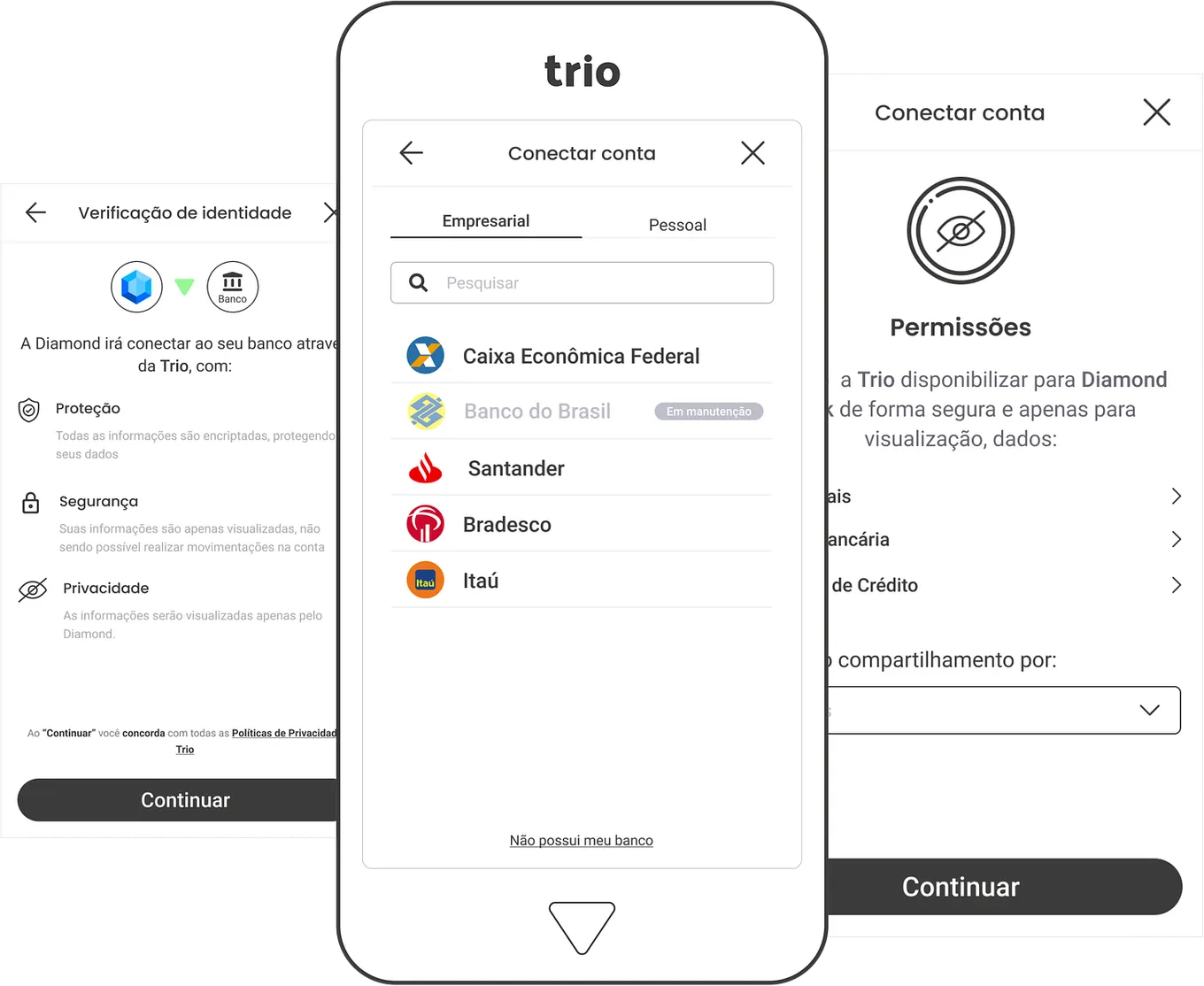
    ⚠️ [Attention] In the webhook response, fetch and balance operations return the Connection ID, which requires version 2 of the API; in V1 it stays as described in the documentation.
    Open this edition
  2. #4

    No-code onboarding, data categorization and automated integration monitoring

    Phew, another cycle has come to an end! We have new features, improvements and fixes, all already available to every user.

    🆕 No-code onboarding for new customers

    We’ve received a lot of praise for our API documentation, but a recurring complaint from customers is not having a team available to build the integration. With that in mind, we’re working on a fully no-code feature: you won’t need to write a single line of code to use Trio and bring all the concepts of Open Finance into your business.

    The no-code integration is still in beta, but anyone can already sign up and request access.

    🆕 Transaction categorization

    We’ve finally launched our transaction categorization model. We know how different it is to categorize and generate value from individual (retail) and company (business) transactions, so our model was trained on business accounts, and we’ll soon announce it for personal accounts too.

    Categorization is part of the transaction: whenever we receive a transaction, we process it in the background and, once that’s done, update the status of each transaction.

    The categorization model is in beta and already available to all customers. For any questions or suggestions, please get in touch.

    🧠 Improvements

    • When Trio requests access to Banco do Brasil - Business accounts, the device will be named with a few random letters and numbers to avoid duplicates, for example: Trio-JDO92D;
    • We’ve added a new field called accounting_type to the transaction object, with the value debit (for negative amounts) or credit (for positive amounts);
    • When a connection with MFA (multi-factor authentication) is created, it will fetch all information right away to make the most of the session;
    • We did a complete review of the documentation.

    🐛 Bugs

    Until next time.

    Open this edition
  3. #3

    New onboarding, log identification and fixes

    We’ve reached the end of another cycle, and we have plenty of news to share with you.

    🆕 New customer onboarding

    Starting now, new customers can sign up directly on our website. We know the hardest part is integrating with and understanding the API, so we’ve put together a step-by-step guide to integrating with Trio. We hope you like it!

    Here’s the link to sign up and try our onboarding.

    🆕 Unique identification in logs

    From now on, it will be much easier to find problems and debug questions sent by customers. Every Trio request now carries a header called X-Request-Id, so whenever you spot a problem with a request, send this code to support and we’ll be able to trace everything that happened during the integration.

    For more details on how X-Request-Id works, see our documentation.

    🧠 Improvements

    • The credentials used to create a connection are now available from the institutions endpoint. We’ll keep the documentation available indefinitely;
    • After gathering feedback from several customers, we’ve implemented a new design to identify the Sandbox environment in Bridge integrations.

    🐛 Bugs

    • Fixed an issue with the relationship between a connection and the user who gave consent;
    • Fixed an issue that prevented creating connections for the Santander - Business institution: the integration was returning incorrect data because of a new update for fetching credit card information.

    Until next time!

    Open this edition
  4. #2

    New integrations, API pagination, usability and performance

    This changelog covers the new features, improvements and fixes we shipped in the last cycle (Jan 17 to Jan 28), all already available to every customer.

    🆕 New integrations

    Offering new integrations is one of our main goals, but we always choose quality over quantity: we want integrations that work. During this cycle, we finished integrating two more institutions:

    🟠 Itaú - Business

    The Itaú integration for business accounts was one of the most awaited. These are the available resources:

    We only support the default account linked to the operator code.

    🟡 Banco do Brasil - Business

    The Banco do Brasil integration was also in high demand. These are the available resources:

    We only support the default account linked to the J key (chave J).

    You’ll find more details about the supported institutions and resources in our documentation.

    🆕 API pagination

    Pagination for the Transactions and Balance endpoints is now in production. To deliver better performance when making connections, we built cursor-based pagination, so paginating results has no impact on performance.

    You can find the full documentation for this new feature here.

    🧠 Improvements

    • Since launching Bridge V2, we’ve collected plenty of feedback and shipped a series of usability and stability improvements so the connection experience is flawless;
    • Improved communication with the institutions we integrate with, resulting in more secure, faster integrations;
    • Full monitoring of integrations; this information will soon be available in the customer dashboard.

    🐛 Bugs

    • Fixed the authentication issue with the Caixa Econômica Federal institution;
    • Fixed duplicate transactions returned by the integration.
    Open this edition
  5. #1

    New Bridge version, more robust integration infrastructure, fixes and improvements

    🆕 New Bridge version

    After a few months running our MVP, we’ve launched a much more robust new version focused on usability, addressing some conversion issues we had identified. These are the main changes:

    • Minimalist design that puts our customers first and makes customization easier;
    • Fewer steps to complete an integration;
    • Personal and business account selection on the same page;
    • A flow for connecting more than one account in the same process;
    • Animations that let the user know about each step of the flow;
    • New multi-factor authentication flow;
    • Detection of when an institution is under maintenance or unavailable.

    Bridge V2

    🆕 More robust integration infrastructure

    We’ve significantly improved our integration infrastructure with institutions, raising our success rates and availability.

    🧠 Improvements

    • UX & UI review of the entire onboarding flow for new Trio users;
    • Improved the information returned in the webhook payload: users can now identify more easily which webhook is being received;
    • Address, ZIP code (CEP) and phone information now comes back in a standard format for integrations with every institution.

    🐛 Bugs

    • Fixed an issue that prevented API users from deleting a Connection through the API;
    • Fixed a bug when fetching the checking account balance at the Itaú - Personal institution;
    • Fixed the Nubank integration in Sandbox.
    Open this edition

Get it in your inbox

Product and engineering updates from our team, with every release.