Pix and the start of a new era of payments
With the advantages and new features the Central Bank keeps adding to Pix, Brazilian businesses could say a final goodbye to boletos. So why hasn't the farewell begun?
Learn how Pix’s new technology has the potential to replace the traditional boleto (Brazil’s bank payment slip) and bring advantages and speed to those who take part in this transformation.
Pix, Brazil’s instant payment system, is the most popular payment method in the country today, overtaking TED and DOC bank transfers and even unseating the convenience of the credit card. Since its launch in 2020, according to the latest Central Bank data, more than 75 million Brazilians use it regularly.
Because Brazilians embraced this new way to pay so widely, the Pix charge (Pix Cobrança) emerged as one more alternative for business owners who want to make paying easier and give their customers another option. To use it, you simply generate a QR code to receive a given payment, whether immediate or in the future.
On the other side is the boleto, a fully established method with a superpower for the finance back office: DDA (Débito Direto Autorizado, Brazil’s registry of boletos issued against a company). It is an essential tool for many finance managers and CFOs, especially those who handle large payment flows.
You probably have your favorite and defend it tooth and nail. But is it worth giving the other one a chance?
Why boleto?
The boleto as we know it today was defined to adapt it into an electronic payment method, with barcodes, following a Central Bank regulatory instruction in 1993. The format and general features of billing boletos were developed by CENEABAN and are standardized by FEBRABAN (the Brazilian Federation of Banks) for use across the Brazilian banking network. A boleto is a billing instrument payable at any partner location up to a set date.
Traditional and traceable via DDA (as mentioned above), it is the favorite of collections departments. However, its slow clearing compared with Brazilians’ favorite payment method has left corporate finance managers decidedly frustrated. Above all: why are the Pix fees passed on to businesses so high?
Why Pix?
The payment method has had a meteoric rise since the Central Bank created it. That’s because it is Brazilians’ favorite:
- FOR THE PAYEE: Pix is the fastest way to get paid: as soon as the bank authenticates the payment, the money is in the payee’s account.
- FOR THE PAYER: It is the payment method least likely to fall through at the last second compared with credit cards, which can often be declined for no logical reason, simply because of slow communication between the card network and the payment gateway.
- FOR RECONCILIATION: Since the system is integrated nationwide (and will also connect to other countries now that Pix is open-source technology), every transaction has a unique ID, which is essential for the finance back office to reconcile with the parties involved and the management system.
- FOR HIGH VOLUMES: It is the smoothest method, and it costs individuals nothing. Even so, businesses end up paying all the fees, so overhauling the whole system to collect with Pix isn’t that attractive when your bank passes on the same fees as for issuing boletos. As a result, Pix innovation stays far from companies’ back offices. Exactly where managers attached to traditional models, and the banks, want it to stay.
Will Pix put an end to the boleto?
Absolutely. And we’ll prove it!
Payers can already use scheduled Pix, Pix in installments (Pix Parcelado) or Pix Garantido (guaranteed Pix), a substitute for the credit card. The user starts the same way: opening the phone camera and scanning the QR code with their bank app. From there, countless options appear: split it into 12 installments? Pay from your balance? Schedule the payment? One thing is certain: these days, being unable to pay a Pix is practically impossible, and asking for a boleto instead of Pix makes less and less sense.
For payees, the biggest innovation is the Pix charge: a type of Pix designed for businesses such as service providers, individual microentrepreneurs, and small and large companies. This feature lets any business issue QR codes to bill with a future due date, adding and editing basic information: late fees, interest and discounts.
Riding on the success of the Pix name, many payment facilitators are calling the Pix charge Pix Boleto, Bix or Bolix. One of the most common ways to reduce friction and familiarize users with the Pix charge is to place the QR code next to the boleto code (printed or digital). However, since a boleto barcode was generated, it must be settled the same way, which puts the cost on the issuer of the charge.
It’s important to stress that the Pix charge was established by the Central Bank of Brazil and every company has the right to issue it. Depending, of course, on issuance fees: each bank is entitled to set its own.
After the payment: it’s not over until it’s over
The payment itself is only one part of the process. After the charge or transfer, every transaction leaves a traceable ID at the bank, a code that opens up the whole record, where you can find:
- Who the payer was (name and CPF or CNPJ, the individual or company tax ID)
- The date and time the payment was made
- Which bank it was paid through
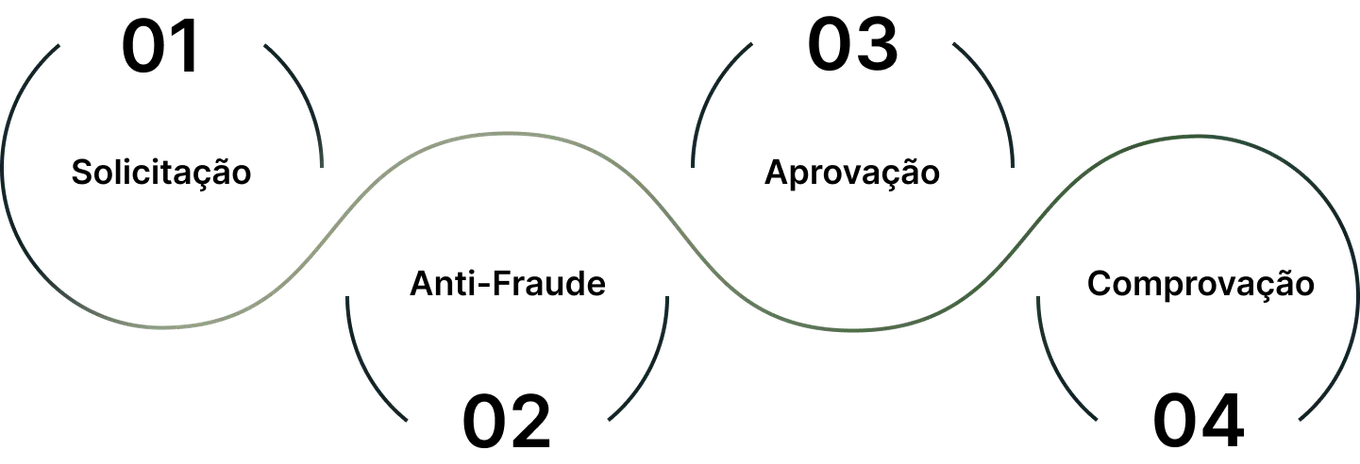
The transaction ID is stored in the account statement, and the finance team has to spend hours “hunting” down countless transactions to record them in the management and tax systems.
Something similar happens when a boleto is issued, since it creates an identifier in the DDA, which stands for Débito Direto Autorizado (authorized direct debit). DDA is essential for many finance managers and CFOs, especially those who handle large payment flows. On the other hand, it keeps the flow locked into the boleto alone, preventing companies from fully enjoying Pix’s innovations. That creates a difficulty, as well as new friction at checkout, since Pix is increasingly advantageous for the end consumer.
To bring traceability to every transaction and remove the barrier to innovation in countless finance back offices, Trio developed technology that streamlines communication between parties and links each transaction to its corresponding record, eliminating the possibility of human error.