Trio MCP, your AI agents connected to your company account
Connect Claude, ChatGPT and other MCP-compatible clients to your corporate account: the agent reads balances, statements, payments, receivables and cards. Money movements stay with people.

Talk to your corporate account in Claude, ChatGPT and other MCP-compatible clients.
Hello, we have important news for your operation!
In this update, we focused on bringing your account data to where your team already works with AI. Trio MCP is now available: Trio’s MCP server connects Claude, ChatGPT and other MCP-compatible clients to your company’s corporate account. From now on, the agent reads your organization’s balances, statements, payments, receivables and cards, and answers your team with the numbers from your operation, no spreadsheet export needed.
Check out the details:
1. What Trio MCP is
MCP (Model Context Protocol) is the open standard AI agents use to connect to other systems. Trio MCP is our implementation of that standard: a set of tools the agent uses to read your account, each with a description that tells it when to use it and which one to prefer for a similar question.
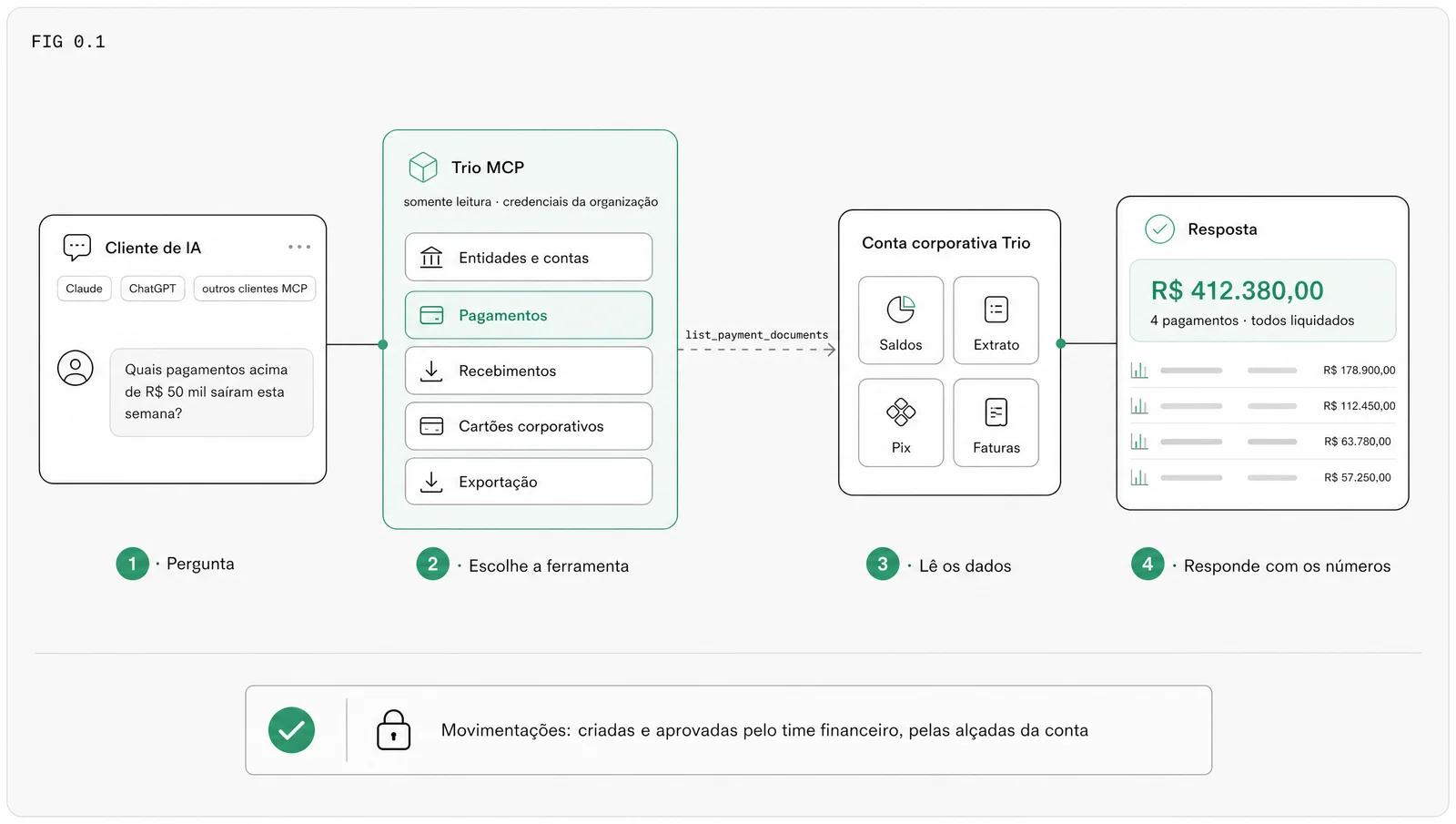
You ask in plain language, the agent picks the right tool, walks through the whole period page by page, and answers with the numbers behind the answer.
2. 16 tools to read your whole operation
The tools follow the same conventions as Trio’s API and cover five areas of your account:
- Entities and accounts: the organization’s CNPJs, accounts with real-time available balance, consolidated statement with running balance, and transfers between accounts (
list_entities,list_bank_accounts,get_account_statement,list_bank_account_transfers). - Payments: payments sent in a period, a payment by
external_id, Pix E2E orplatform_id, and payments sent to a CPF or CNPJ (list_payment_documents,search_payment_documents,list_payment_documents_by_tax_number). - Receivables: Pix received and deposits in a period, a receivable with its payer, and receivables from a CPF or CNPJ (
list_collecting_documents,search_collecting_documents,list_collecting_documents_by_tax_number). - Corporate cards: the entity’s prepaid Mastercard cards, purchases in a period, a purchase by E2E, the open invoice with amounts pending confirmation, and invoice history (
list_cards,list_card_purchases,get_card_purchase_by_e2e,get_current_card_invoice,list_card_invoices). - Export: a temporary link to download an invoice as CSV (
export_card_invoice).
3. What your team can ask
A few examples of what Trio MCP answers with your account data:
- Treasury: “What is the consolidated balance across the group’s entities right now?” The agent lists the entities, checks each one’s accounts and returns the balance per entity and in total.
- Accounts payable: “Which payments above R$50,000 went out this week?” The agent walks through every page of the period and filters by amount.
- Accounts receivable: “Has the Pix with this E2E arrived?” The agent finds the transaction and shows each step, with who paid.
- Cards: “What makes up the marketing card’s open invoice?” The agent reads the current invoice and, if you ask, generates the CSV link.
- Controllership: attach your ERP spreadsheet and ask for a check of the period. The agent walks through the statement and flags what didn’t match, by each entry’s
external_id.
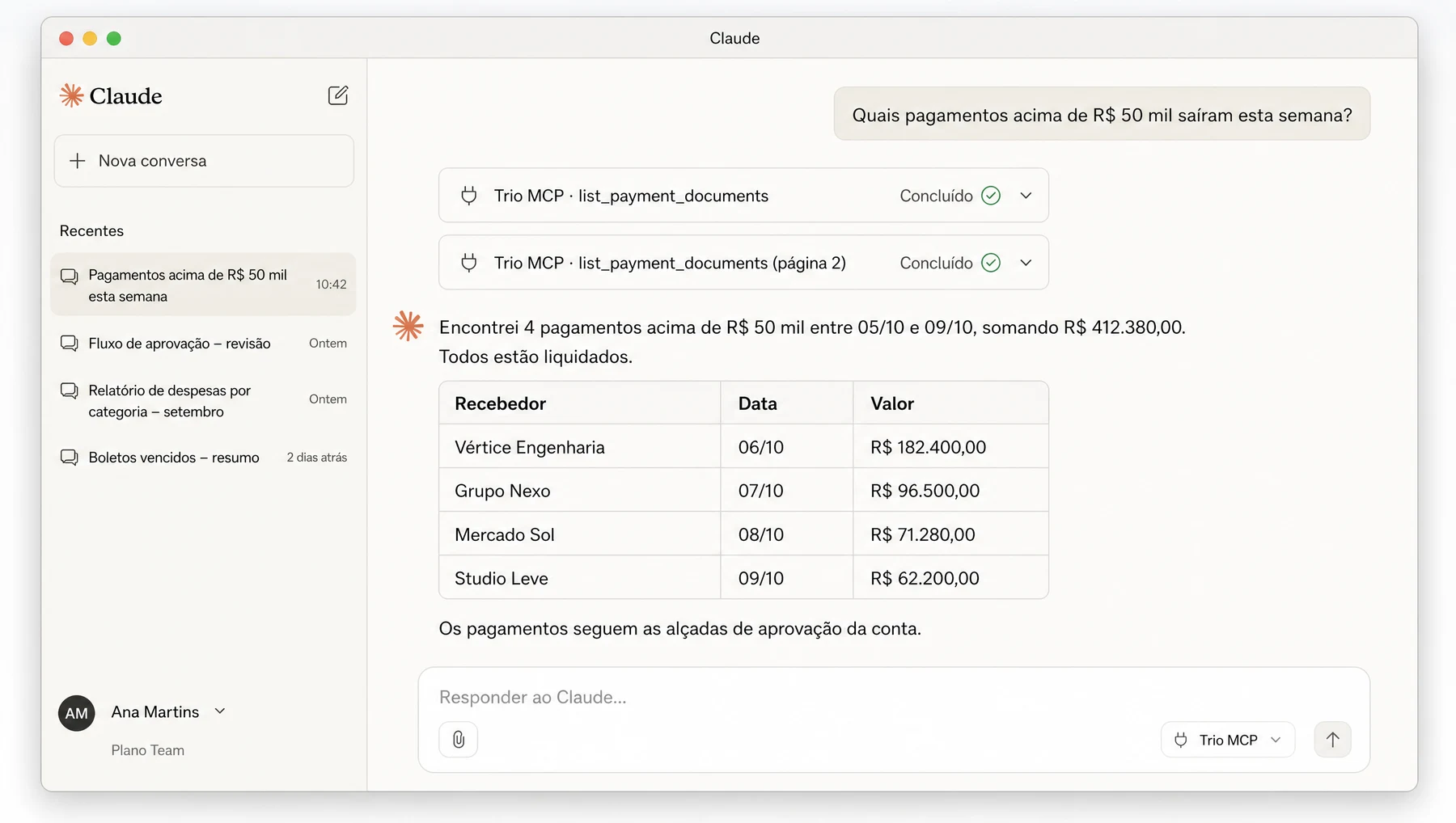
In Claude: the week’s payments above R$50,000, with the total.
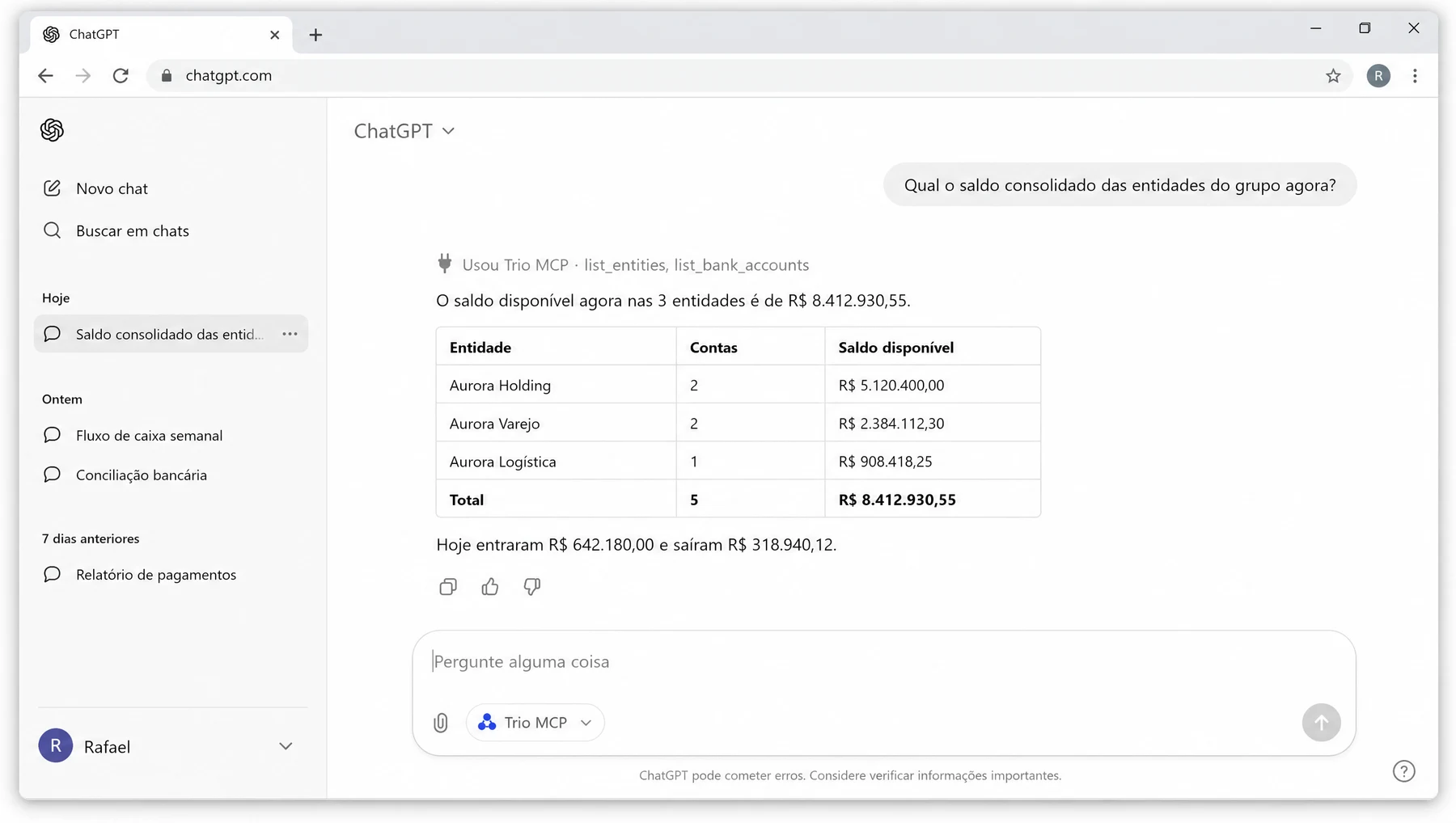
In ChatGPT: the consolidated balance across the group’s entities.
4. Agents read, analyze and explain. People approve.
Trio MCP was designed so the decision stays with your team:
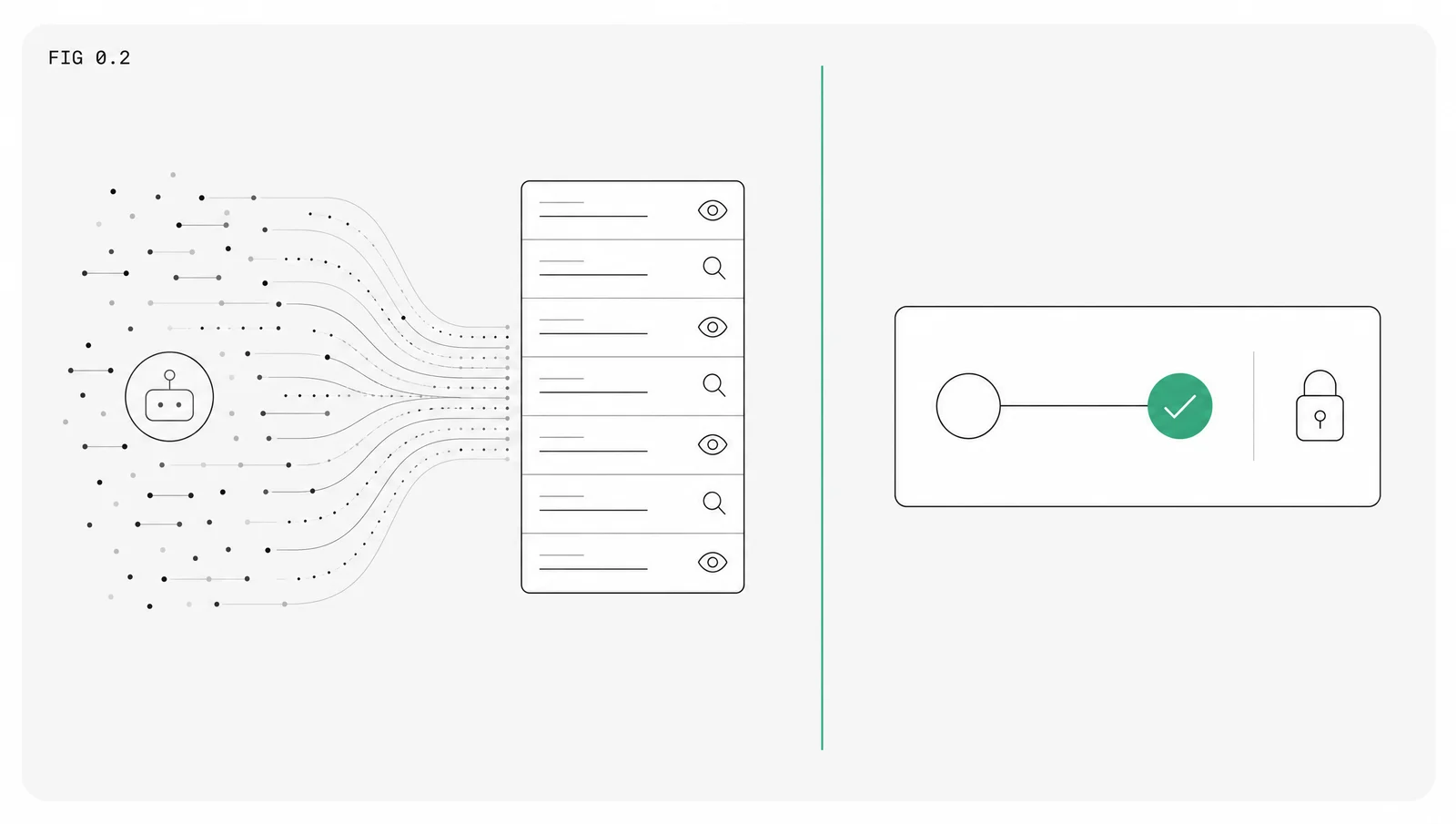
- Read-only: the tools read balances, statements, transactions, cards and invoices. None of them creates or approves money movements. Payments are still created and approved in Trio, through your account’s approval rules.
- Only your organization: every call runs with the credentials that authenticated the session and is limited to your organization’s data.
- Cards always masked: the agent gets the card number as 5555 •••• •••• 4021, never the full number.
- Unambiguous data: amounts always in cents (R$50,000.00 arrives as
5000000), dates in ISO 8601 and paginated listings withbeforeandaftercursors, so the agent covers the whole period before answering.
5. For developers: build your own agents
Trio MCP’s tools mirror Trio’s API endpoints: payment, receivable and transfer documents, external_id and amounts in cents. To go beyond the ready-made tools, your team can build its own agents on the REST API and test everything in the Sandbox, with no financial risk.
6. How to get started
To connect Trio MCP to your company’s account, talk to Trio and tell us how your team wants to use AI agents. All the product details, with the full list of tools, are on the Trio MCP page.
We hope you enjoy the news!
See you next time,
The Trio Team